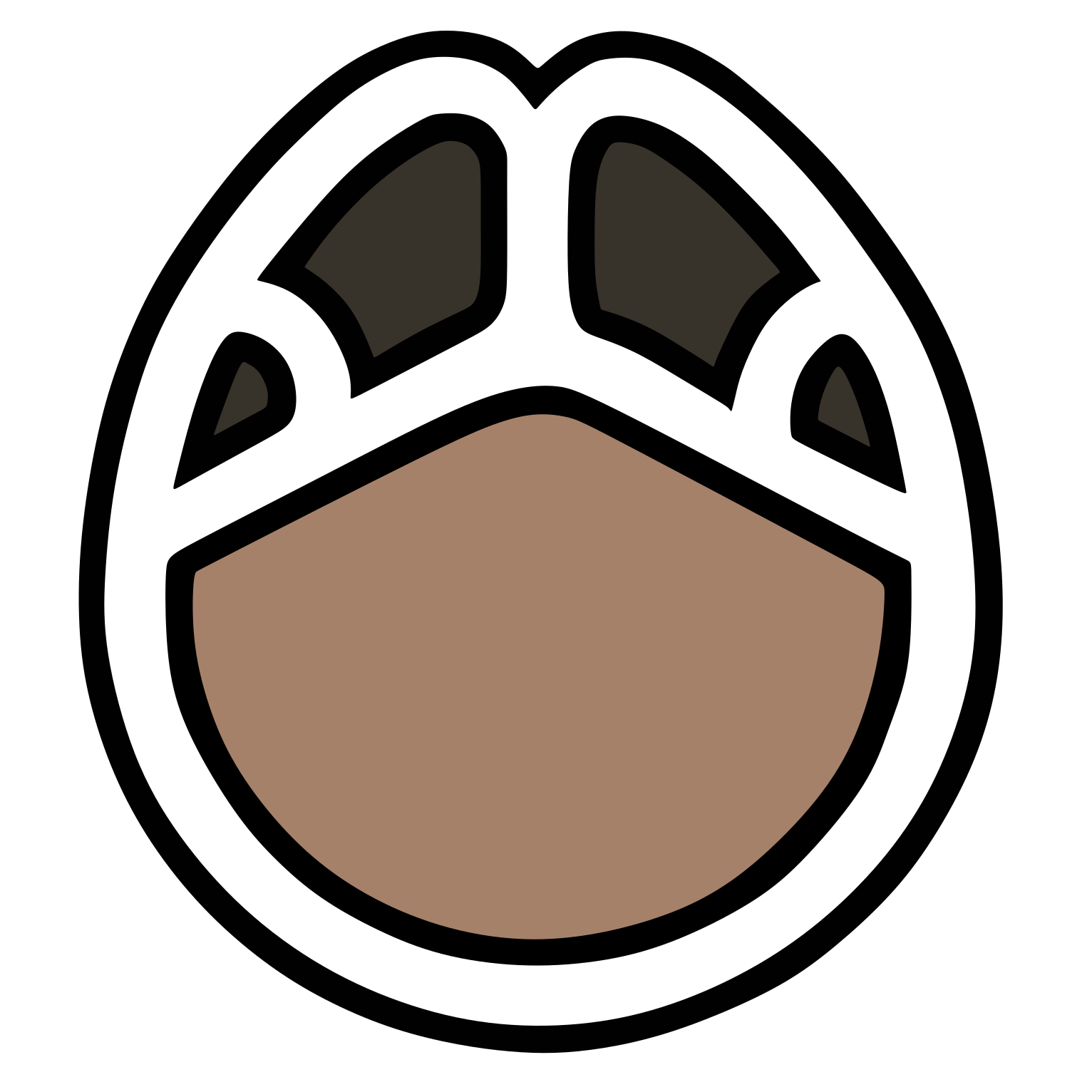
DD
Dermatitis Digitalis
Mortellaro Disease
Most common infectious claw disease in dairy cattle. Lesions mainly located around the heel bulb and interdigital space, from early M1 to active ulcer M2. Highly contagious, requires rapid intervention.
The International ICAR Claw Health Atlas is the global standard for documenting cattle claw diseases. Cownt uses official ICAR codes, your reports are understood by veterinarians worldwide.
A hoof trimmer working to the ICAR standard can communicate precisely with veterinarians, farmers and specialists across the country, using the same codes. It is not just a formality: it is a language that builds your professional authority.
Cownt has the full ICAR code database built in, ready to use from the very first launch. No need to create your own taxonomy, no risk of error.
Caused by bacteria, highly contagious, quick recording and response is key to stopping spread within the herd.
Mortellaro Disease
Most common infectious claw disease in dairy cattle. Lesions mainly located around the heel bulb and interdigital space, from early M1 to active ulcer M2. Highly contagious, requires rapid intervention.
Interdigital Skin Inflammation
Infectious inflammation of the interdigital skin. Presents with foul odour and macerated skin between the claws. Less painful than DD, but often accompanies other lesions.
Phlegmon / Footrot
Acute, purulent infection of the subcutaneous tissue of the interdigital space. Severe pain, obvious lameness, swelling above the claw. Requires immediate antibiotic treatment.
Changes related to claw horn growth and nutrition, often linked to laminitis and metabolic stress.
White Line Abscess
Separation of the white line and accumulation of pus within the claw capsule. Typical in cows after calving. Treatment: cleaning, relief block, monitoring.
Sole Ulcer (Rusterholz)
Necrosis and ulceration of the posterior-lateral sole. One of the main causes of lameness in cows. Often associated with the periparturient period and laminitis.
Toe Tip Necrosis
Necrosis of the toe tip and lamellar cracks at the toe. Often the result of claw instability or overlapping changes. Difficult to treat in advanced stages.
Toe Ulcer
Ulceration in the toe area, often confused with TS. Requires precise cleaning and relief with a corrective block on the healthy limb.
Deep Toe Necrosis
Deep necrosis reaching the bone. Prognosis is serious. In advanced cases may require digit amputation or a culling decision.
Long-term changes to the anatomy and shape of the claw, often genetic or the result of chronic neglect. Require regular correction.
Interdigital Hyperplasia (Tyloma)
Chronic, irregular thickening and overgrowth of interdigital skin. Usually painless, may predispose to secondary infections. Surgical treatment for large lesions.
Corkscrew Claw
Growth disorder of the horn, twisting and elongation of the medial digit. Structural change, often genetic. Requires regular and intensive correction throughout the animal's life.
Horizontal Horn Fissure
Transverse crack in the claw wall horn, usually a sign of previous metabolic stress or systemic disease from several months ago. Can lead to loss of the toe tip.
Döpfer's system: 6 stages precisely describing the progression and regression of Mortellaro disease. Essential for evaluating treatment effectiveness.
Intact, healthy skin. No signs of DD whatsoever.
Active lesion <2 cm. Slight redness or erosion. Responds well to treatment.
Active ulcer >2 cm. Most infectious stage. Requires immediate intervention, topical antibiotic + bandage.
Recovery stage after treatment. Lesion closing, surface smoothing. Continue monitoring.
Chronic lesion, thickened, proliferating skin. Minimally painful, but returns to M2 under stress.
M4 stage with small active M1 lesion (watch for reactivation). Requires treatment.
MI, WET and CTR supplement disease codes, allowing injuries, veterinary treatments and follow-up visits to be recorded in one place.
Mechanical injury to the claw, abrasion, cut, horn fracture. Enter code MI and describe the location. Not an infectious disease.
Veterinary intervention, antibiotic, injection, nerve block. Record separately from the disease code.
Control during the next trimming visit, checking the effects of previous treatment. A key element in tracking progress in the herd.
Cownt has the full ICAR code database built in from the first launch. Three clicks, cow number, limb, code, and done. Full PDF report for the farmer at the touch of a button.